

Retinol is one of the most effective ways to achieve younger, clearer skin. At Cope Cosmetic Dermatology, we offer a variety of retinol strengths and formulations to help you achieve your highest cosmetic goals.
What Is Retinol?
Retinol is a form of vitamin A that boosts skin cell turnover. It’s considered one of the most beneficial skincare ingredients and comes in a variety of strengths. The term “retinol” is actually an umbrella term for a type of skin product containing vitamin A. All retinol products must be first converted into retinoic acid with enzymes and proteins to be useable by the skin. This means that the closer a product is to retinoic acid, the more potent it is. Prescription retinol is very close to retinoic acid and requires very little conversion – it’s thus the most effective form.
Book now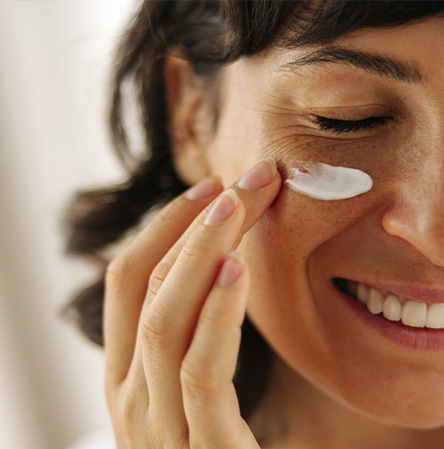
Retinoids
Retinoids are some of the most effective skincare products available, although they’re most often prescribed by a board-certified dermatologist because of their strength. One of the most common forms is Tretinoin, although Adapalene can be purchased over-the-counter in many products.
Retinaldehyde
Retinaldehyde, or retinal, is slightly less potent than retinoids. It requires less conversion than retinol but can be less effective (and irritating) than retinoids. It’s often available in physician-grade products.
Retinol
Retinol is available over-the-counter because it requires much longer to have a noticeable effect. Although it can be found in high concentrations through over-the-counter products, it’s generally safe for use without your dermatologist’s oversight.
Retinyl Palmitate
This type of retinol is the gentlest form and is best for people with sensitive skin. Although it may be a weak formulation, it can still achieve great benefits over a longer period.
What Are the Benefits of Retinol?
There are many, many proven benefits of retinol. It’s considered the gold standard in anti-aging regimens and can effectively prevent wrinkle and fine line formation with regular use. It does so by helping boost your skin’s cellular reproduction to more efficiently uncover healthy new skin cells (a process that tends to slow down as early as your 30s).
An additional benefit of retinol is that it’s one of the most effective ways to combat chronic acne. Again, it can help boost cell turnover to reduce congestion and prevent breakouts. It also can help manage oil production for those whose breakouts are caused by oiliness. And finally, it can help prevent scarring from severe breakouts that have already gone down.
Retinol also has a body of study that shows it’s one of the most effective ways to fight a variety of medical skin concerns like psoriasis, melasma, pigmentation, visible pores, and more.
How Should I Use Retinol?
The best way to get started with retinol is by consulting a board-certified dermatologist. A dermatologist can help you find the appropriate strength for your skin’s needs and help you manage any side effects. Retinol should be used at nighttime since it can make your skin photosensitive. Make sure to wear daily sunscreen when using retinol and inform your skincare specialist before you undergo any skincare treatments.
Use only a small amount and apply it evenly to your entire face and finish with a gentle, unscented moisturizer. It’s normal to experience irritation and breakouts when you first start using retinol, so continue to use it according to your dermatologist’s instructions. Depending on your specific formulation, you may need to begin with using it every other day before using it more regularly.
Conditions
Lines & Wrinkles

What Are Lines and Wrinkles?
Lines and wrinkles are the most recognizable form of aging and are what most people think of when the term “aging” comes to mind. Lines and wrinkles are an inevitable part of aging skin but can be treated by reversing the effects or preventing them altogether (prejuvenation). In either case, surgery is not always necessary, and you can achieve excellent results with the help of a board-certified dermatologist.
Types of Lines and Wrinkles
Crow’s feet
Crow’s feet are fine lines that can appear at the corners of the eyes because of facial expressions like squinting or laughing. In many people, they’re one of the first places where fine lines appear.
Frown lines
Frown lines are lines or folds between the brows. They form when you frown or furrow your brow, causing a tired or frustrated appearance even if you don’t feel that way.
Brow lines
Some people simply have more expressive foreheads than others, which can contribute to the formation of creases and lines in the brow.
Smoker’s Lines
Fine lines around the lips can be the result of a lifetime of smoking or drinking through a straw. They’re often caused by repeated puckering of the lips, creating tiny creases around the mouth.
Sleep Lines
Sleep lines are caused by pressing your face into your pillow while sleeping. They tend to be vertical because they aren’t caused by natural expressions, but rather creasing that happens while you sleep.
Aging & Volume Loss
What is Aging and Volume Loss?
Aging and volume loss are the inevitable product of many different factors. Although we tend to think of aging as manifesting in certain ways, it’s actually intrinsically tied to volume loss. By treating volume loss, you can treat many of the telltale signs of aging.

Signs of Aging and Volume Loss
Nasolabial folds
Nasolabial folds are the lines that run from the corners of the nose to the mouth. Although many people naturally have them, they can deepen with age as the cheeks begin to sag.
Jowls
Jowls are skin that hangs from the jawline, which can become more pronounced as you age. They’re usually the result of skin in the cheeks that loses its support and falls downward.
Hollow cheeks
Full, rounded cheeks are a sign of youth. As you age, however, it’s normal for the fat pads in the cheeks to shift downward, resulting in a hollow look.
Sun Damage

What Is Sun Damage?
Sun damage can go by a few different names including photoaging or photodamage. It usually appears as brown spots or areas of dullness, texture, or dryness in areas where the sun reaches the skin. Over time, sun damage can cause premature aging or even skin cancer, meaning it’s important to prevent and treat it with the help of a dermatologist.
Download Dr. Cope's Free BookRetinoids
Retinoids are some of the most effective skincare products available, although they’re most often prescribed by a board-certified dermatologist because of their strength. One of the most common forms is Tretinoin, although Adapalene can be purchased over-the-counter in many products.
Retinaldehyde
Retinaldehyde, or retinal, is slightly less potent than retinoids. It requires less conversion than retinol but can be less effective (and irritating) than retinoids. It’s often available in physician-grade products.
Retinol
Retinol is available over-the-counter because it requires much longer to have a noticeable effect. Although it can be found in high concentrations through over-the-counter products, it’s generally safe for use without your dermatologist’s oversight.
Retinyl Palmitate
This type of retinol is the gentlest form and is best for people with sensitive skin. Although it may be a weak formulation, it can still achieve great benefits over a longer period.
SCHEDULE AN APPOINTMENT
Ready to feel more like yourself again? Dr. Cope combines expert care with a relaxed, personal approach to help you age gracefully and regain your confidence. Let’s create a personalized plan just for you. Reach out through our online form or give us a call to learn more about our medical spa services.
385-337-2376 Schedule